

CPT Accessories
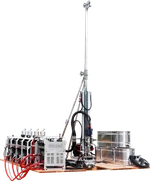
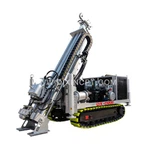
Taizhou Dixin Exploration Instrument Co., Ltd. is a leading enterprise of cone penetration testing equipment integrating R&D, manufacturing and sales. With its excellent product quality and high-quality on-site tracking service, the company has won the favor of users of geotechnical engineering survey units all over the country. At present, Dixin has become the largest manufacturer of crawler-type static sounding equipment in China and the largest manufacturer of crawler-type static sounding equipment in China. The CPT crawler equipment produced by the company has also successfully assisted important government projects at home and abroad for many times.
Why choose us?
Our certification
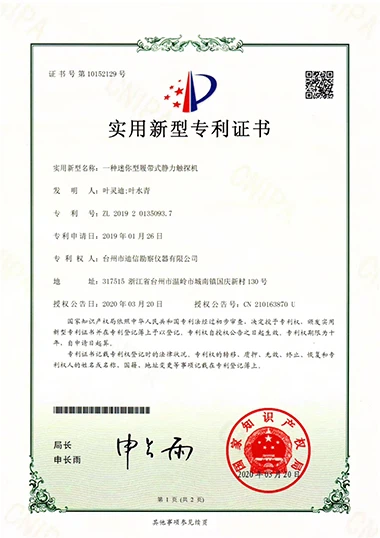
The company has passed the ISO900 international quality certification system. At present, the company has more than 30 patents, including 3 invention patents.
Our factory
The company has more than 16 Years Experience and has a modern production base with a construction area of more than 10,000 square meters.we have more than 40 Enterprise Employees.
Our equipment
It has advanced CNC machine tools and other high-precision processing equipment, high-precision testing equipment, etc., with more than 80 sets of equipment.
Professional services
The company has sent professional after-sales technicians to provide follow-up services for different survey fields in different regions for a long time, collected feedback information from on-site use.



Types of CPT Accessories
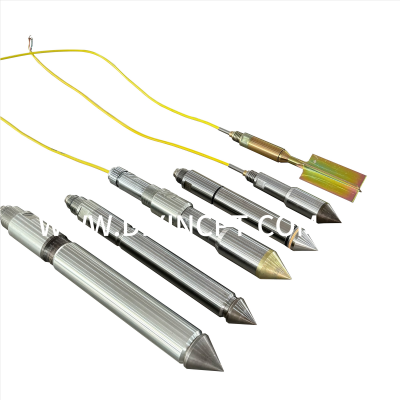
The CPT Accessories Produced By Our Company Mainly Includes the Following Types

CPT Casing Tubes
CPT (Cone Penetration Testing) casing tubes are thin-walled steel tubes that are used to insert the cone penetrometer into the soil/rock layers for testing the strength, stiffness, and consistency of the material. These tubes are typically 1.5 inches in diameter and are designed to protect the penetrometer from damage during the drilling operation.

CPT Detector
A CPT detector is a device used for Cone Penetration Testing (CPT), which is a method used to determine the geotechnical properties of soil and rock formations. The detector consists of a cone-shaped tip that is forced into the soil or rock by hydraulic pressure, typically using a hydraulic ram.

Plate Load Tester
A Plate Load Tester is an instrument used to determine the bearing capacity and settlement of soil beneath the foundation of a structure. The tester consists of a metal plate of a standard size that is placed on the soil surface and loaded with a hydraulic jack. The applied load causes the soil to compress and the resulting settlement is measured.
Advantages Of CPT Casing Tubes
Corrosion-resistant: CPT casing tubes are highly resistant to corrosion due to the presence of a protective layer that shields them from harsh environmental factors.
Durable: They are made of high-quality materials that are designed to withstand extreme pressure and temperature conditions, making them ideal for use in a wide range of oil and gas applications.
Easy to install and maintain: CPT casing tubes are easy to install and require minimal maintenance, which helps to reduce downtime and overall operating costs.
Provides better well integrity: The use of CPT casing tubes ensures that wells remain structurally intact and can withstand high-pressure conditions, improving overall well integrity and safety.
Enhanced drilling performance: CPT casing tubes can help improve drilling performance by providing stable borehole conditions, reducing the risk of hole collapse and formation damage.
Resistant to wear and tear: CPT casing tubes have excellent wear and tear resistance and can withstand harsh drilling conditions, reducing the need for frequent replacements.
Applications Of CPT Casing Tubes
Soil and geotechnical investigation: The CPT casing tubes are used to carry out soil and geotechnical investigations and determine the physical and engineering properties of the soil. It is the most reliable method for conducting sub-surface geological surveys.
Foundation engineering: In foundation engineering, CPT casing tubes are used to conduct load-bearing capacity tests, determine the soil bearing capacity, and identify the possibility of soil liquefaction during seismic activity.
Environmental site assessment: CPT casing tubes are used to study soil texture and composition, groundwater level, and the presence of any contamination in the soil, making them valuable tools for environmental site assessments.
Engineering design: CPT casing tubes are used for the design of structures such as dams, tunnels, bridges, and roadways to determine the soil properties and the optimal design for the foundations.
Construction quality assurance: CPT casing tubes are used for quality assurance purposes and ensure that the soil has adequate load-bearing capacity and meets the engineering standards before and during construction.
Pipeline and cable trench routes: CPT casing tubes are used to determine the route for pipelines and cable trenches, ensuring that the soil can support the structures and the route is secure.
Parameter
|
Casing thread |
Square |
|
Casing outer dia |
55mm, 63.5mm |
|
Probe length |
500mm, 1000mm |
Advantages Of CPT Detector
Accurate measurements
CPT detector provide accurate measurements of sub-surface soil conditions by measuring resistance as it penetrates the soil.
01
Non-destructive
CPT detector are non-destructive testing tools that enable precise measurements without disturbing the soil structure.
02
Efficient and fast
CPT detector are an efficient and fast way to gather data about soil conditions for geotechnical and environmental investigations.
03
Detailed data
With advanced software and equipment systems, CPT detector provide detailed data about subsurface conditions that can help in designing and constructing foundations, infrastructure, and other structures.
04
Application of CPT Detector
Geotechnical engineering
The main application of a CPT detector is in geotechnical engineering. It is used to provide information about the soil strength, deformation behavior, and other properties.
Environmental studies
CPT detector is widely used to collect soil samples and conduct environmental assessments.
Archaeology
CPT detector can be used to investigate the soil layers where an archaeological site is located.
Oil and gas industry
The detector can be used to locate and analyze oil and gas reserves. It can be used to measure the permeability and porosity of the rocks surrounding petroleum deposits.
Military applications
CPT detector can be used by military organizations to detect landmines and unexploded ordnance.
Construction industry
The detector can be used to take precise measurements of sub-soil conditions, making it possible to design safer and more efficient foundations.
Technical Specification
|
NAME |
Specification |
Measuring parameter |
Test range |
|
SINGLE BRIDGE |
10cm2 |
Ps |
0~45Mpa |
|
15cm2 |
0~60Mpa |
||
|
DOUBEL BRIDGE |
10cm2 |
Qc,Fs |
0~45Mpa, 0~450KPa |
|
15cm2 |
0~60Mpa, 0~600KPa |
|
CPTu DOUBEL-BRIDGE |
10cm2 |
Ps,u |
0~45Mpa, 0~800KPa |
|
CPTu THREE-BRIDGE |
10cm2 |
Qc,Fs,u |
0~45Mpa, 0~450KPa,0~800KPa |
|
CPTu FOUR-BRIDGE |
10cm2 |
Qc,Fs,u,TiLT |
MAX RANGE 50~70MPa,800KPa,5000KPa,0°-90° |
|
15cm2 |
MAX RANGE 80MPa,800KPa,5000KPa,0°-90° |
||
|
CROSS PLATE |
PLATE HEAD 50*100mm 75*150mm |
|
0~60KPa |
Advantages Of Plate Load Tester
Cost-effective
Plate load testing can be more cost-effective than other methods of testing because it requires fewer resources and materials.
Real-life simulation
Plate load testing simulates real-life conditions, which helps to provide accurate and reliable data.
Quick results
The test can provide results within a few hours, reducing the time required for testing and analysis.
Simple to use
Plate load tests are relatively easy to perform and require less training than other methods.
Versatile
The plate load tester can be used on a variety of soils, making it suitable for a wide range of applications.
Non-intrusive
The test is non-intrusive, which means it does not damage the soil or require excavation.
Minimizes environmental impact
Minimizes environmental impact
Plate load testing does not generate waste or require chemicals, which minimizes its impact on the environment.
Accurate
Plate load testing provides accurate data, which can be used to design more reliable structures and infrastructure.
Application of Plate Load Tester
Pavement design: The plate load tester is used to determine the bearing capacity of subgrade soil beneath pavements. It helps in designing the thickness of the pavement layers and ensuring that it can withstand the expected traffic loads.
Foundation design: The plate load tester is used to determine the bearing capacity of the soil below foundation footings. It helps in designing the depth and size of the footings to ensure the stability of the structure.
Soil improvement: The plate load tester is used to evaluate the effectiveness of soil stabilization techniques, such as soil compaction or the insertion of a geogrid. It helps in determining the degree of improvement in soil strength and the ability to support structures.
Embankment design: The plate load tester is used to determine the bearing capacity of the soil beneath an embankment. It helps in designing the height and cross-section of the embankment, ensuring it can withstand the expected load.
Slope stability analysis: The plate load tester is used to determine the mechanical properties of the soil, such as shear strength, stiffness, and deformation characteristics. It helps in evaluating the slope stability and potential for landslides.
Technical Specification
|
Steel load plate diameter |
300mm |
|
Jack loading capacity range |
0-10T |
|
Jact stroke |
160mm |
|
Bridge span |
3000mm |
|
Manual oil pump rated pressure |
60mpa |
|
Pressure test range |
0-25mpa |
|
Displacement test range |
0-10mm |
|
Mechanical oil |
No. 15 |
|
R ambient temperature |
5 °C - 45 °C |
Customer Cases

Our Certifications